75 years in 15 minutes: from Turing to ChatGPT
AI's history is a 75-year drama: a brilliant start with Alan Turing, decades of broken promises and 'AI winters', and the sudden explosion we're living through right now. Knowing this story, you'll understand modern AI better than most of its users.
It feels like AI showed up in 2022 along with ChatGPT. In fact the story is 75 years old, and it's full of geniuses, drama and broken promises. Let's go.
Try it first — right here. Below the prompt there's a Run button: press it and a real AI answers on this very page — all it takes is a free one-click sign-in (Google or Telegram). Put your own job in the brackets — or run it as is:
You are an experienced assistant. I work as a [your job].
Name 5 work tasks you could take off my hands,
and for each one give a short example of the request I'd send you.
That's what AI is: you wrote the task in plain words — it did the work. This whole course is about getting answers like that reliably, not by luck. Remember how this minute felt — now back to the history, without which AI never quite makes sense.
Act I. The man who came up with the question (1950)
England, 1950. The mathematician Alan Turing publishes a paper with an audacious question: "Can machines think?" This is the same Turing who broke the Enigma cipher machine in the Second World War. Historians estimate it shortened the war by two years.
Instead of arguing philosophy, he proposes a game — we now call it the Turing test. The idea is simple: if you can't tell a machine from a human in a written conversation, does it matter whether it "thinks"? The result beats the definition. Seventy-two years later, millions of people would be chatting daily with a machine that's ever harder to tell from a person. Turing never saw it. He died in 1954 at 41, hounded by the same government he had helped save. Today the top prize in computer science — the Turing Award — carries his name.
Act II. The term is born, and so are the promises (1956–1969)
Summer 1956, Dartmouth College in the US. A young mathematician named John McCarthy gathers a couple of dozen scientists for a summer workshop and, for the grant application, invents a catchy label: artificial intelligence. The term we all use is literally 70 years old, and it was born as marketing for a grant.
Optimism was off the charts. In 1958 the psychologist Frank Rosenblatt unveiled the perceptron — the first learning "neural network", the size of a wardrobe. The New York Times wrote that machines would soon "walk, talk, see and be conscious of their existence". The pioneers promised human-level intelligence "in 20 years".
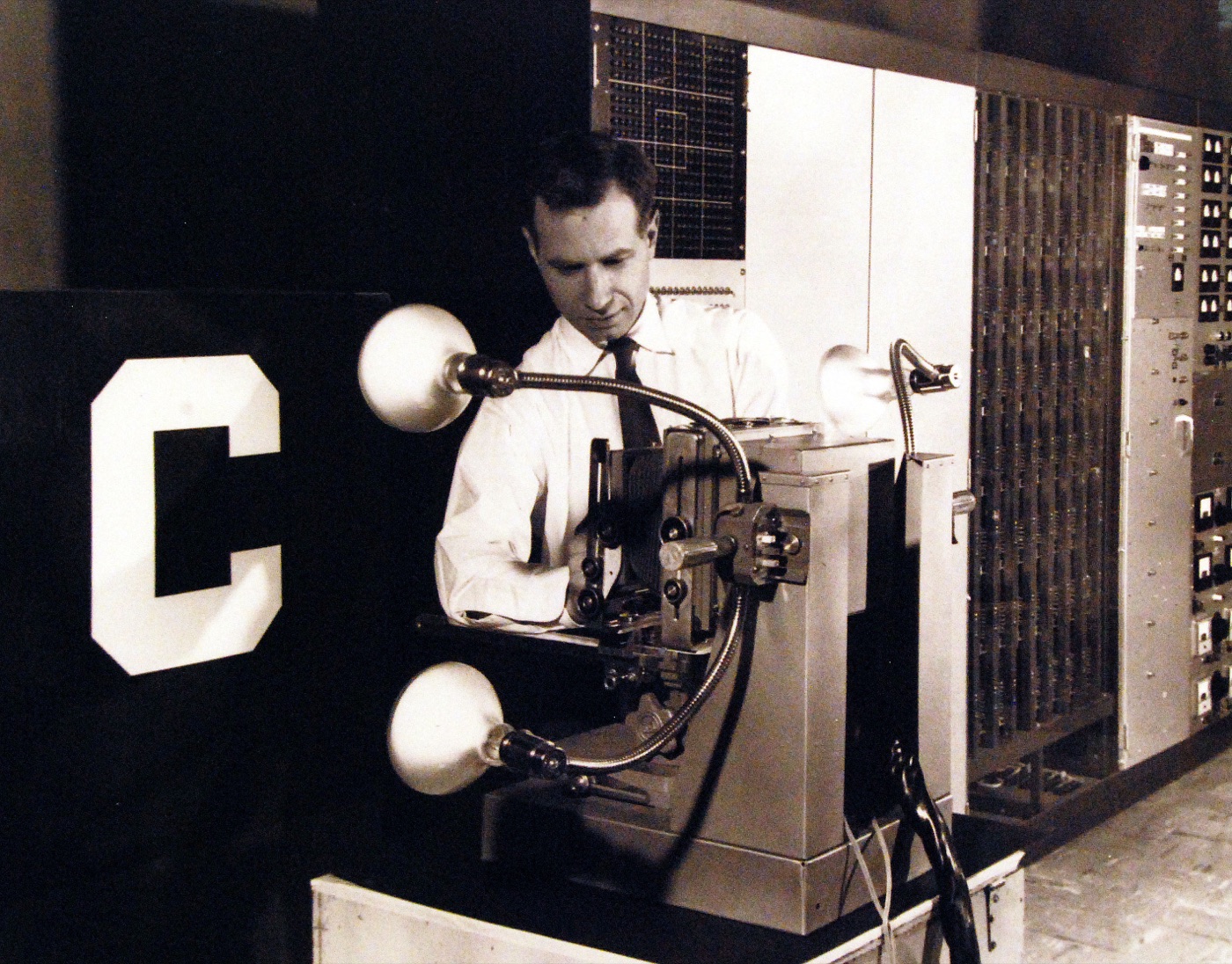
What do you think went wrong?
Act III. The AI winters (the 1970s and the late 1980s)
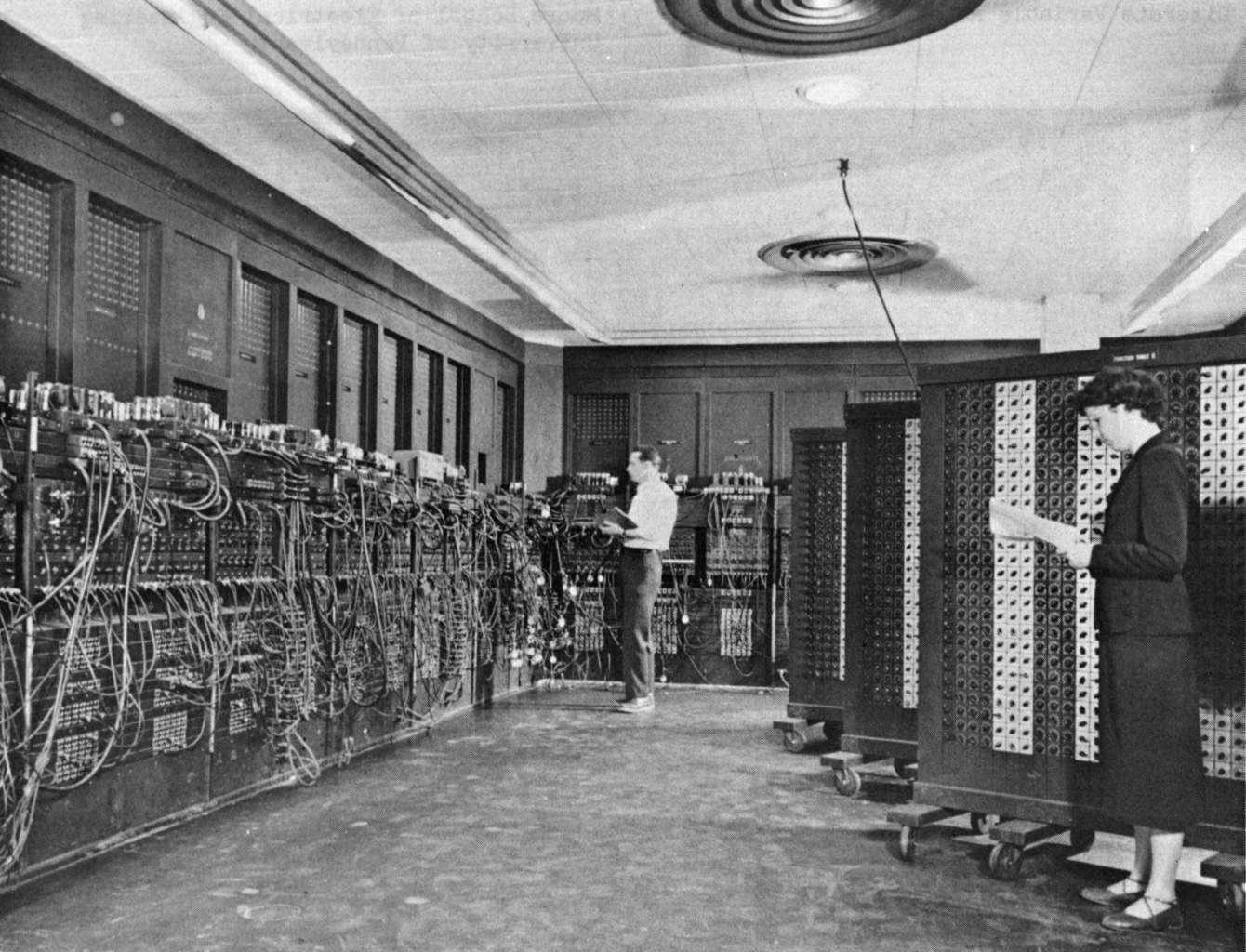
Almost everything went wrong: computers were millions of times too weak, there was no data, and the methods themselves hit a ceiling. In 1973 the British Lighthill report tore the field apart: the promises hadn't been kept. Funding was cut, labs closed — the AI winter had arrived. In the 80s "expert systems" (programs made of thousands of if-then rules) repeated the story: a boom, billions invested, then a second collapse once it turned out the rules were impossible to maintain.
Remember this pattern: oversized promises → disappointment → crash. It explains today's arguments about AI too.
Act IV. The quiet revolution (1990–2012)
While "AI" was practically a dirty word, a small group of scientists — among them Geoffrey Hinton, one of the leading minds behind neural networks and a 2024 Nobel laureate — stubbornly kept working on them. Their idea was simple and radical: don't program in the knowledge, let the machine learn from examples. Two ingredients were missing: data and computing power.
The internet brought both. By 2012 billions of labelled pictures had piled up, and the graphics cards built for gaming (GPUs) turned out to be perfect for training neural networks. In 2012 AlexNet, built by Hinton and his students, crushed the field at the ImageNet image-recognition contest: the margin was enormous — the error rate fell from roughly 26% to 15% in a single year. The race was on.
Act V. The explosion (2016–2022)
2016: AlphaGo beats the world Go champion Lee Sedol — at a game with more possible positions than there are atoms in the universe. Commentators called its 37th move in game two "not a human move, and not a machine move, but something new".
2017: Google engineers introduce a new neural-network architecture — the transformer. An architecture is the network's internal layout: the scheme it follows to process information. Older schemes read text word by word and, by the end of a long sentence, had "forgotten" the start. The transformer looks at the whole text at once and works out which words are connected to which — the mechanism was named "attention".
A network like that can be trained on gigantic amounts of text, and it's the very thing behind the T in GPT — Generative Pretrained Transformer. Data and power now had a third companion: the right architecture.
30 November 2022: OpenAI opens ChatGPT to the public. 100 million users in two months — at the time the fastest growth any consumer app had ever seen (Instagram took 2.5 years to get there, TikTok 9 months). The record for sheer speed would later fall to Threads, which hit 100 million in five days — but it was ChatGPT that first showed AI had become a mass-market product. A 75-year-old story walked out of the labs and into everyone's phone.
What this means for you
Three takeaways you'll use in every lesson that follows. One: modern AI learns from examples rather than following programmed rules — Hinton's idea beat the expert systems of Act III. Two: the breakthrough came when three ingredients met — data (the internet), power (GPUs) and architecture (the transformer) — and all three are still growing. Three: as the AI winters showed, this field can both overpromise and overdeliver — so from here on we'll separate reality from hype using facts.
And if you already tried the request from the top of this lesson, call it your first practical step: there are plenty more coming, and with each one AI will follow you more precisely.
Short questions on the lesson — with an explanation for every answer.